How Qigong Helped Me Catch Health Issues Before They Got Real
I never thought slow breathing and gentle movements could reveal so much about my health—until I started practicing qigong regularly. Within weeks, I noticed subtle body signals I’d ignored for years. What felt like minor stiffness or fatigue turned out to be early warnings. This isn’t magic—it’s awareness. And it might just help you catch imbalances before they become serious. Let me share how.
The Moment I Realized Something Was Off
For years, I told myself I was fine. My annual checkups came back normal—blood pressure stable, cholesterol in range, no red flags. Yet, I was tired. Not the kind of tired that a good night’s sleep could fix, but a deep, persistent exhaustion that lingered no matter how much I rested. I’d wake up already drained, relying on coffee just to function. My shoulders were always tight, my jaw clenched without reason. I chalked it up to stress, motherhood, aging—anything but a real problem.
What disturbed me most wasn’t the fatigue itself, but the disconnect between how I felt and what the tests said. Doctors assured me everything was within normal limits, yet I knew my body wasn’t operating as it should. I started noticing other small things: bloating after meals I’d eaten for years, occasional dizziness when standing up, trouble concentrating during simple tasks. These weren’t emergencies, but they were constant, like background noise I could no longer ignore.
It wasn’t until I began qigong that I understood what had been happening. The practice didn’t fix me overnight, but it gave me a new way of listening. For the first time, I could feel the subtle imbalances I’d been dismissing. That fatigue wasn’t just ‘being busy’—it was my body’s way of signaling that something deeper needed attention. The tightness in my shoulders wasn’t just stress; it reflected long-held tension patterns that had gone unchecked. Qigong didn’t diagnose me, but it made me aware. And awareness, I’ve learned, is the first step toward true health.
What Is Qigong, Really? Beyond the Hype
When I first heard about qigong, I pictured people in flowing robes waving their arms in parks. I assumed it was either performance art or something too mystical to be practical. But as I looked deeper, I realized qigong is neither mystical nor theatrical. At its core, qigong is a centuries-old practice rooted in traditional Chinese wellness philosophy, built on three simple elements: breath, movement, and attention. It’s not about dramatic poses or intense workouts. Instead, it’s a gentle, intentional way of reconnecting with your body’s internal state.
Unlike Western exercise, which often focuses on pushing limits, qigong emphasizes sensitivity. The movements are slow, deliberate, and repeated with awareness. Each motion is paired with deep, rhythmic breathing, which helps calm the nervous system and bring focus inward. This combination—movement, breath, and mindfulness—creates a space where you can begin to notice what your body is trying to tell you.
One of the most important things I learned is that qigong is not a treatment. It doesn’t claim to cure disease or replace medicine. Instead, it’s a preventive practice, designed to maintain balance before problems arise. In traditional thought, health isn’t just the absence of illness—it’s the smooth flow of energy, or ‘qi,’ throughout the body. When that flow is disrupted, even slightly, imbalances can develop over time. Qigong helps you detect those disruptions early, long before they become serious.
Modern life, with its constant stimulation and fast pace, dulls this kind of awareness. We’re trained to ignore bodily signals—pushing through fatigue, suppressing discomfort, numbing stress with screens or snacks. Qigong gently reverses that pattern. It teaches you to slow down, tune in, and notice the quiet messages your body sends every day. It’s not about achieving perfection; it’s about cultivating presence.
Why Early Detection Starts with Awareness
Most of us wait until symptoms become undeniable before seeking help. A fever, pain, or sudden change in function—these are clear signals that something is wrong. But by the time these signs appear, the body has often been struggling for a long time. What if we could recognize the whispers before the shouts? This is where awareness becomes a powerful tool for prevention.
Medical science now recognizes the concept of subclinical imbalances—physiological or energetic shifts that occur before a condition becomes diagnosable. These might include slight changes in digestion, sleep disturbances, mood fluctuations, or persistent low-grade inflammation. Lab tests may not detect them, but the body often does. Think of it like a car’s dashboard: before the engine fails, warning lights may flicker. If you’re not looking, you miss them. If you’re paying attention, you can address the issue early.
Qigong enhances this kind of internal monitoring. By practicing regularly, you become more attuned to your baseline state. You start to notice when something feels off—even if it’s subtle. Maybe your left shoulder feels heavier than the right. Maybe your breath doesn’t flow as deeply after certain meals. Perhaps you feel a sense of restlessness in the evenings that wasn’t there before. These aren’t necessarily symptoms of disease, but they are clues.
Over time, this heightened sensitivity allows you to respond proactively. Instead of waiting for a diagnosis, you might adjust your diet, improve your sleep routine, or seek gentle movement to support circulation. You begin to see your body not as a machine to be fixed, but as a dynamic system that communicates constantly. Awareness doesn’t replace medical care—it complements it. It gives you the ability to act earlier, with more insight, and with greater confidence in your own experience.
How Qigong Sharpens Your Body’s Feedback Loop
The power of qigong lies in its ability to reset your body’s feedback system. Most of us live in a state of low-grade sensory overload. We’re bombarded by noise, screens, and demands, making it hard to hear internal signals. Qigong creates a quiet space where those signals can be felt. The practice works through three interconnected mechanisms: movement, breath, and stillness.
Slow, intentional movement increases proprioception—the body’s ability to sense its position and motion. When you move deliberately, you begin to notice areas of restriction, tension, or imbalance. For example, during a simple arm-raising exercise, you might realize one side moves more freely than the other. That asymmetry could indicate muscular tightness, poor circulation, or even nerve compression developing over time. These observations aren’t diagnoses, but they are valuable data points.
Regulated breathing plays a crucial role as well. Deep, diaphragmatic breaths activate the parasympathetic nervous system, reducing stress hormones and lowering heart rate. This state of calm allows the mind to focus inward without distraction. As your breath slows, so does your thinking. You stop analyzing and start sensing. You might notice a slight tightness in your lower back, a coolness in your hands, or a sense of fullness in your abdomen that wasn’t apparent before.
Stillness—especially in practices like standing meditation—amplifies this effect. When you stand quietly, with eyes closed and attention inward, the body begins to reveal its hidden patterns. Some people report feeling warmth in their palms, a tingling in their feet, or a sense of energy moving along certain pathways. Others notice emotional shifts—moments of sadness or relief that arise without explanation. These experiences aren’t supernatural; they’re signs that the body is releasing stored tension and restoring balance.
Over time, this feedback loop becomes more refined. You learn to distinguish between normal fluctuations and persistent imbalances. You start to correlate physical sensations with lifestyle factors—stress, diet, sleep, or emotional state. This doesn’t mean you become hyper-vigilant or anxious. On the contrary, the practice fosters a grounded, compassionate awareness. You’re not watching for problems—you’re learning to listen with kindness.
My Daily Practice: Simple Routines That Made a Difference
One of the most encouraging things about qigong is that it doesn’t require hours of practice or special equipment. I started with just ten minutes a day, and even that made a difference. My routine is simple, sustainable, and designed to build awareness gradually. I practice in the morning, before the day’s demands take over, but any consistent time works.
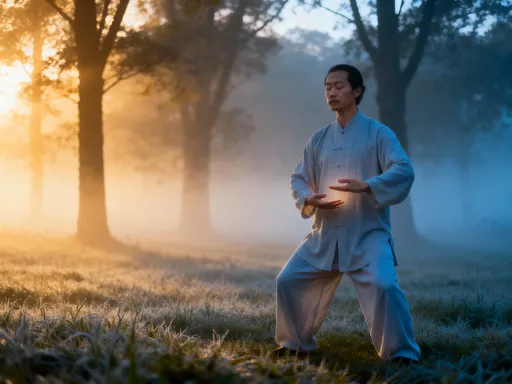
The foundation of my practice is Zhan Zhuang, or standing meditation. I stand with feet shoulder-width apart, knees slightly bent, arms rounded as if hugging a tree. My spine is aligned, shoulders relaxed, breath slow and deep. At first, I could only manage five minutes without fidgeting or losing focus. Now, I can stand for ten to fifteen minutes, feeling the subtle shifts in weight, temperature, and energy flow. This practice teaches patience and presence. It’s not about doing anything—it’s about being fully in the body.
Next, I spend five minutes on abdominal breathing. I sit comfortably, one hand on my chest, the other on my belly. I inhale deeply through the nose, letting the lower abdomen rise, then exhale slowly through the mouth. This simple act calms my nervous system and centers my mind. I’ve noticed that on days when I skip this, my stress levels rise more easily. It’s become a non-negotiable part of my self-care.
The final segment is fifteen minutes of gentle flowing movements. I practice a sequence called ‘Wave Hands Like Clouds,’ where I shift my weight from side to side, arms moving in smooth, circular motions. The movement is slow, almost dreamlike, synchronized with my breath. It improves coordination, loosens my joints, and enhances circulation. More importantly, it helps me feel connected—body and mind moving as one.
Consistency, not intensity, is what matters. I don’t push myself. Some days, my energy is low, and I shorten the session. Other days, I feel more alert and extend it slightly. The key is showing up. Within three weeks, I began noticing changes: better sleep, reduced shoulder tension, and a greater sense of clarity. By six weeks, I was catching subtle signals—like a slight nausea after eating dairy—that led me to discover a mild intolerance I hadn’t known I had. These weren’t breakthroughs, but they were meaningful shifts.
When to Listen—and When to See a Doctor
As my awareness grew, I had to learn the difference between noticing and overreacting. Just because I felt a twinge in my side or a change in my digestion didn’t mean I had a serious condition. Qigong taught me to observe without panic. But it also taught me when to take action. Awareness is not a substitute for medical expertise—it’s a complement.
There were moments when the signals were persistent enough to warrant professional attention. For example, I noticed a recurring tightness in my lower abdomen that didn’t improve with rest or movement. Instead of ignoring it or self-diagnosing, I brought it up with my doctor. After a brief examination and some tests, we discovered a minor hormonal imbalance that was easily managed with lifestyle adjustments. Without the awareness qigong provided, I might have dismissed it as ‘just stress’ and let it worsen.
Another time, I observed that my hands were consistently colder than usual, even in warm rooms. I also felt more fatigued than normal. I didn’t assume it was serious, but I did mention it during my annual checkup. My doctor ordered a thyroid panel, which revealed a slight underactivity. Again, nothing urgent, but something worth monitoring. These experiences reinforced a crucial lesson: your body’s signals are worth discussing with a healthcare provider, but they are not a reason to self-treat or fear.
Qigong doesn’t replace blood tests, imaging, or clinical judgment. What it does is give you a richer, more detailed picture of your daily experience. You become a more informed participant in your care. Instead of saying, ‘I don’t feel well,’ you can say, ‘I’ve noticed fatigue after meals, my digestion feels sluggish, and my energy drops in the afternoon.’ That level of detail helps doctors make better assessments. It turns vague discomfort into actionable information.
Building a Preventive Mindset for Long-Term Wellness
The most profound change qigong brought wasn’t physical—it was mental. I shifted from a reactive approach to health to a preventive one. Instead of waiting for problems to arise, I now focus on maintaining balance. This mindset has influenced other areas of my life: I sleep more consistently, eat more mindfully, and manage stress with greater ease. I’ve learned that wellness isn’t about chasing perfection—it’s about staying aligned with your body’s needs.
Qigong has become my daily anchor. It doesn’t take much time, but it sets the tone for my entire day. It reminds me that health is not a destination, but a continuous process of listening, adjusting, and caring. I no longer see my body as something that will inevitably break down with age. Instead, I see it as a resilient, intelligent system that communicates clearly—if I’m willing to listen.
This practice isn’t about dramatic transformations. It’s about small, consistent actions that add up over time. It’s about catching a stiffness before it becomes pain, a fatigue before it becomes burnout, a tension before it becomes injury. It’s about honoring the quiet wisdom of the body before it has to shout.
If you’re feeling off but your tests come back normal, I encourage you to explore qigong. Not as a cure, but as a way to deepen your relationship with your body. Start with five minutes of stillness. Notice your breath. Feel your feet on the ground. Be patient. The signals may be faint at first, but they will grow clearer with time. And when you begin to hear them, you may discover that the most powerful tool for health was within you all along—awareness.